Inside Fluid Pictures3 min read
Building Camera Systems for Unusual Shots
We've been moving cameras since 1990. A lot of our jobs start with a show asking for a shot the usual gear can't get. Sometimes we can get there with something already in our fleet, set up a different way. Sometimes we have to build it.
It starts with the shot
Every custom rig starts with the move. We look at the space, where the camera has to be, which way it travels, what it's carrying, how fast it goes, and how many times it has to do it. That tells us whether something we already own can do the job or whether we need to build something new.
If we're building, it all happens in our shop. We design the mount, machine the parts, wire the controls, and put it together ourselves. The goal is to get the shot with as little gear on the set as we can.
Curved and inverted track
Two early shows pushed us to run a robotic dolly on curved track and to hang one upside down. Neither shot was possible on straight track laid on the floor, and we were the first to do both.
Making it work was only half of it. It still had to carry the camera, clear the set, and run just as smooth through every rehearsal and the live show.
The Blade Riser System
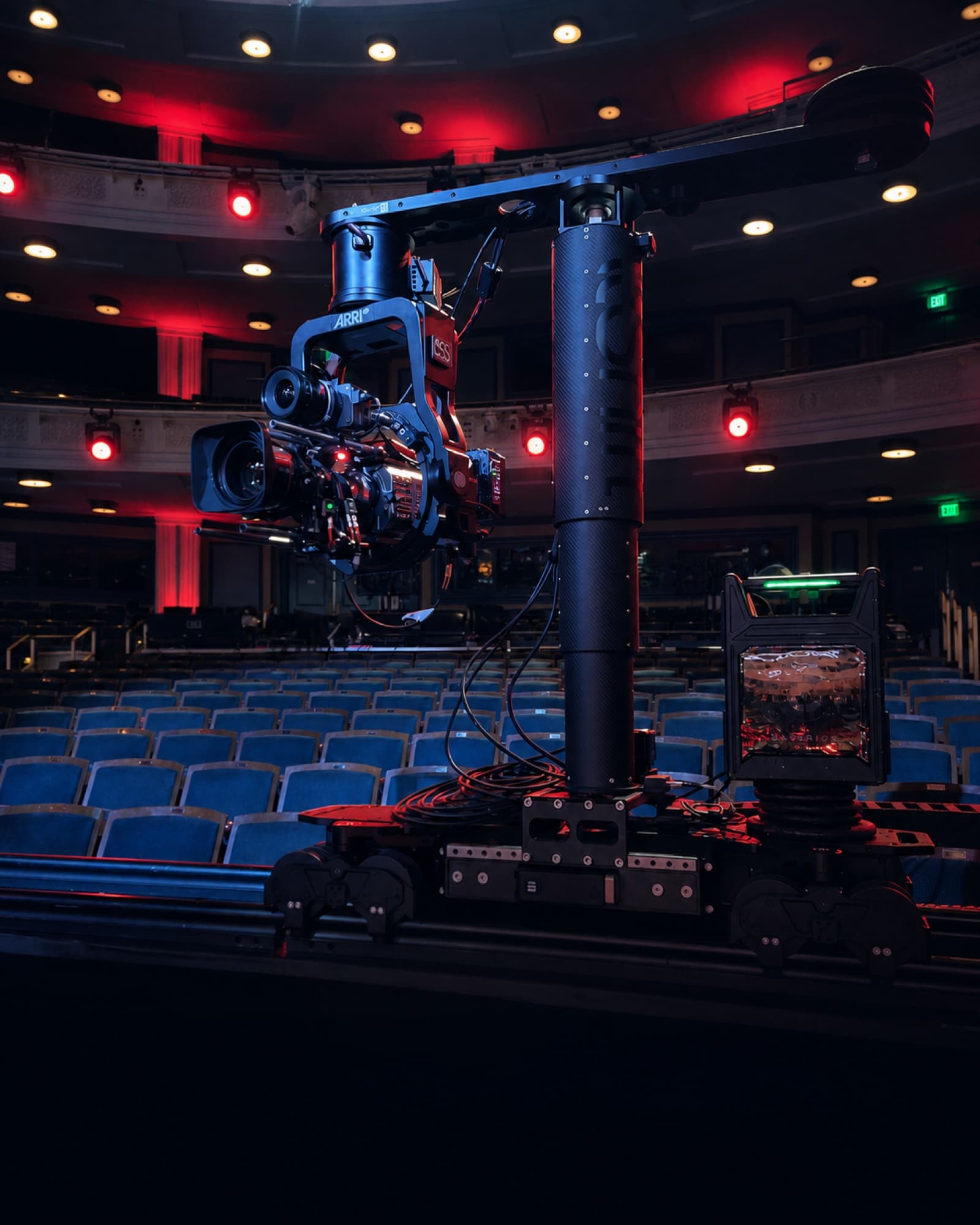
We built the Blade Riser around one stage design. The railcam runs on track under the stage, and a thin riser we machined comes up through a slot in the deck. The only things above the floor are the riser and the camera.
The dolly and track stay out of sight, and the camera can still travel right alongside the performers. Like a lot of our fleet, it was built for one show, and we've kept using it since.
It's all ours
Everything we send out, we own: towercams, Agito robotic dollies, Furio railcams, camera cranes, stabilized heads like the ARRI SRH-360 and FoMa Antares, and our non-stabilized remote heads. And we run all of it. Every job goes out with our own tech.
Cameras and control systems keep changing, so the fleet does too. When we add something new, we set it up and run it in the shop until it works with the rest of our gear, before it ever goes out on a show.
Tested before load-in
Before anything leaves the shop, standard or custom, we build it the way it'll be used on the show and run it: the move, the controls, the mounting, the camera weight. If something doesn't clear or doesn't respond right, we'd rather find out here than at the venue.
It's the same whether it's a towercam we know inside and out or a railcam rig built for one show. We show up with it already working.