1983
Behind the camera
David Eastwood starts working as a camera operator.
A history in motion
Four decades of moving cameras on live television, a lot of it on gear we built ourselves.
1983
David Eastwood starts working as a camera operator.
1984
David shoots all the camera work on SkateVisions, then moves into action sports: surfing, skating, BMX, snowboarding and more.
The list kept growing: motorcycle racing, off-road Baja rallies, skydiving, windsurfing, jet skiing. All of it years before the X Games existed.
1987
David and Theresa meet Jim Stanton in the parking lot at NAB and buy the Jimmy Jib he had just built. According to Jim and Lori Stanton, it was the very first one sold.
The rental business started around it, and the Jimmy Jib, followed by the Steadicam, came into live television in the US through Fluid Pictures.
Advertising was the hard part. There was no internet to speak of, so the offer did the work instead: if you weren't happy with the rental, you didn't pay for it. Every one got paid.
1990
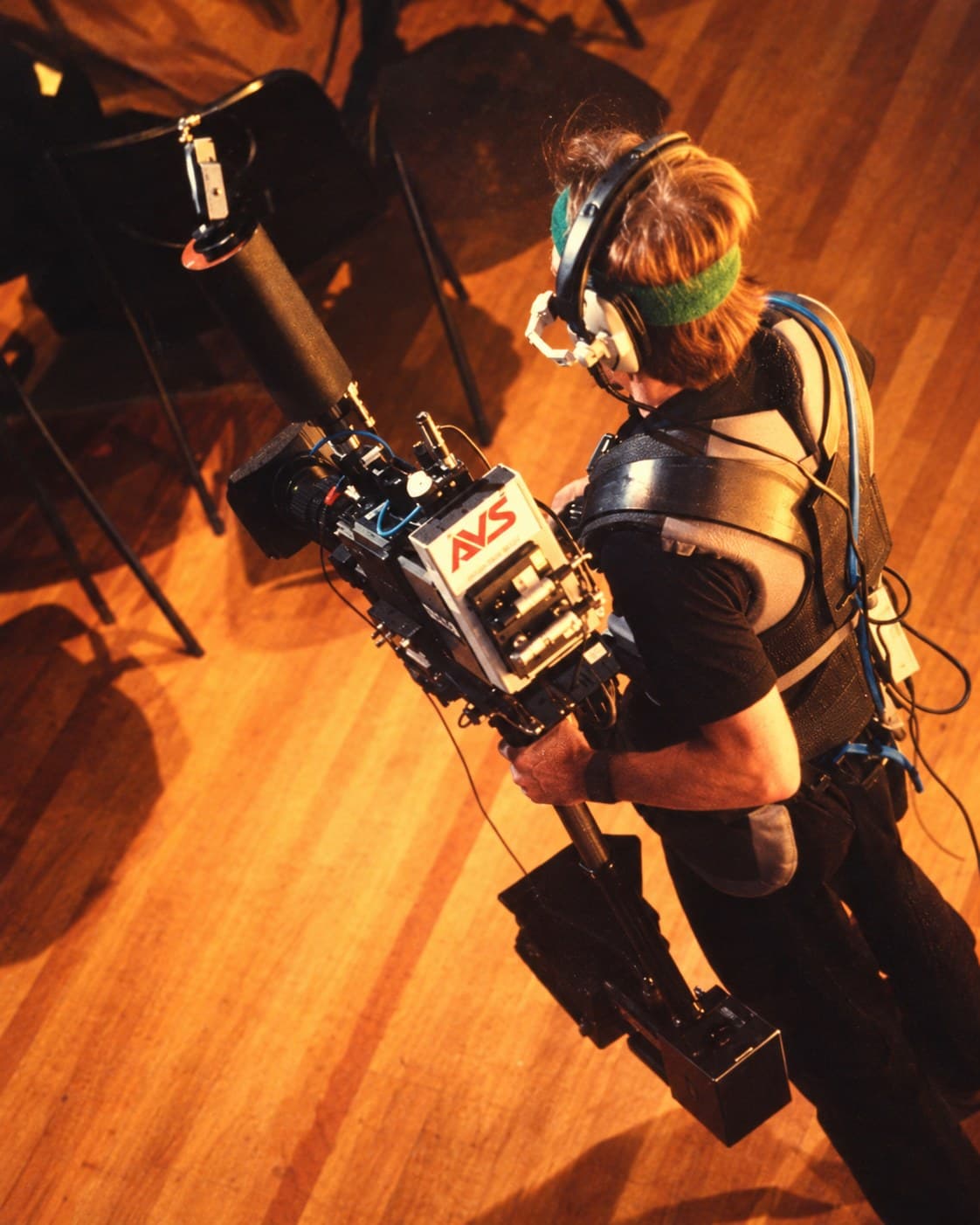
David and Theresa Eastwood found Fluid Pictures Inc. The first Steadicam arrives the same year.
The company had been Eastwood Productions until then, and the rental side was already three years old.
It was the first Steadicam EFP modified with the Jimmy Jib's zoom and focus system, which took the focus puller out of the job. That one-person setup went on to work the Oscars, the Tony Awards, the Emmys and practically everything shot live.
1990s
Show by show, the Steadicam picked up the changes that made it a live television tool. Standard gear today; game changers then.
The list: a custom zoom and focus handle, an on-board program monitor, an operator tally light system, an on-board prompter monitor, a custom ring light, custom Triax and BNC connectors, ultra-thin SMPTE fiber cable, a four-wheeled docking stand, a Moses pole, and even a quarter-size show rundown clipped to the side of the camera.
One operator could frame, pull their own focus, read the prompter and see their cue. That changed how directors used Steadicam on live shows.
2008
Another first for live television: Fluid Pictures introduces the MAT Towercam in the US, adding vertical movement to the fleet.
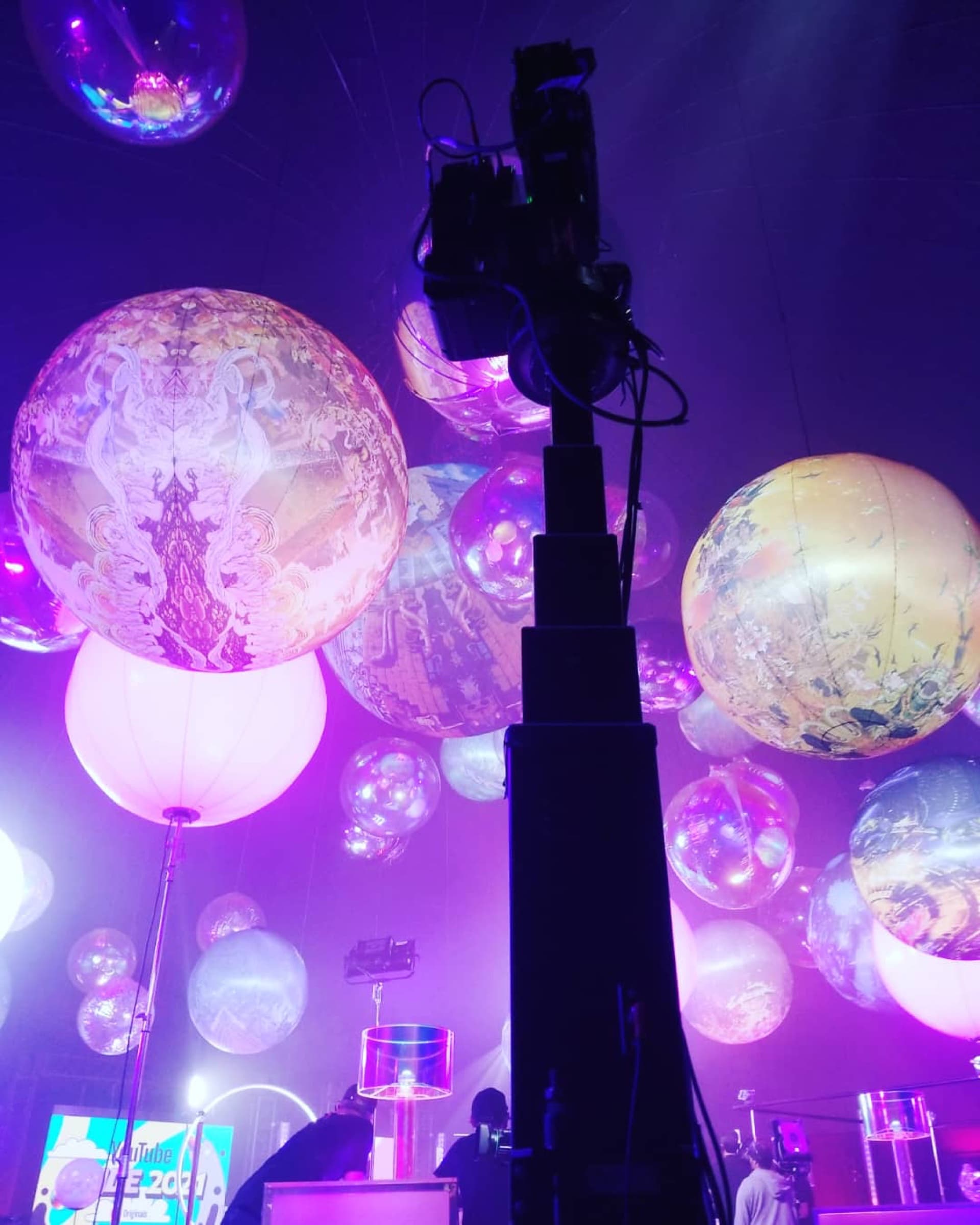
It was the Towercam's first time on the Oscars, the Grammys, and the Olympic opening and closing ceremonies, and it went straight to work on live shows like America's Got Talent, American Idol and Dancing with the Stars.
Later on, one of our Towercam rentals worked the Best Picture nominee The Help. The MAT Towercam system itself was recognized by the Academy's technical awards.
See the towercams2010
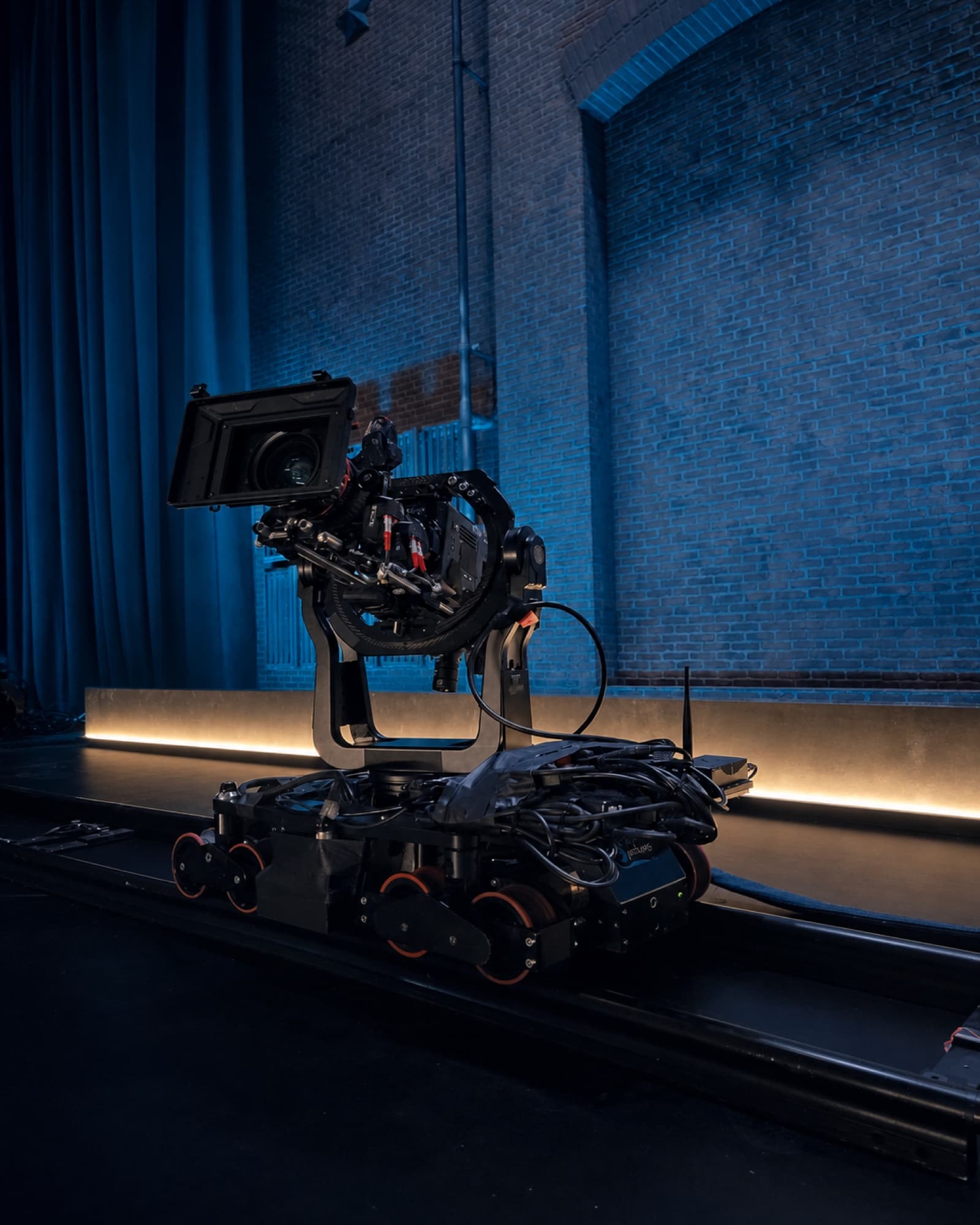
First again: Fluid Pictures introduces the Furio robotic dolly system. We drive and operate it ourselves, and it has been our most-used robotic dolly over the years.
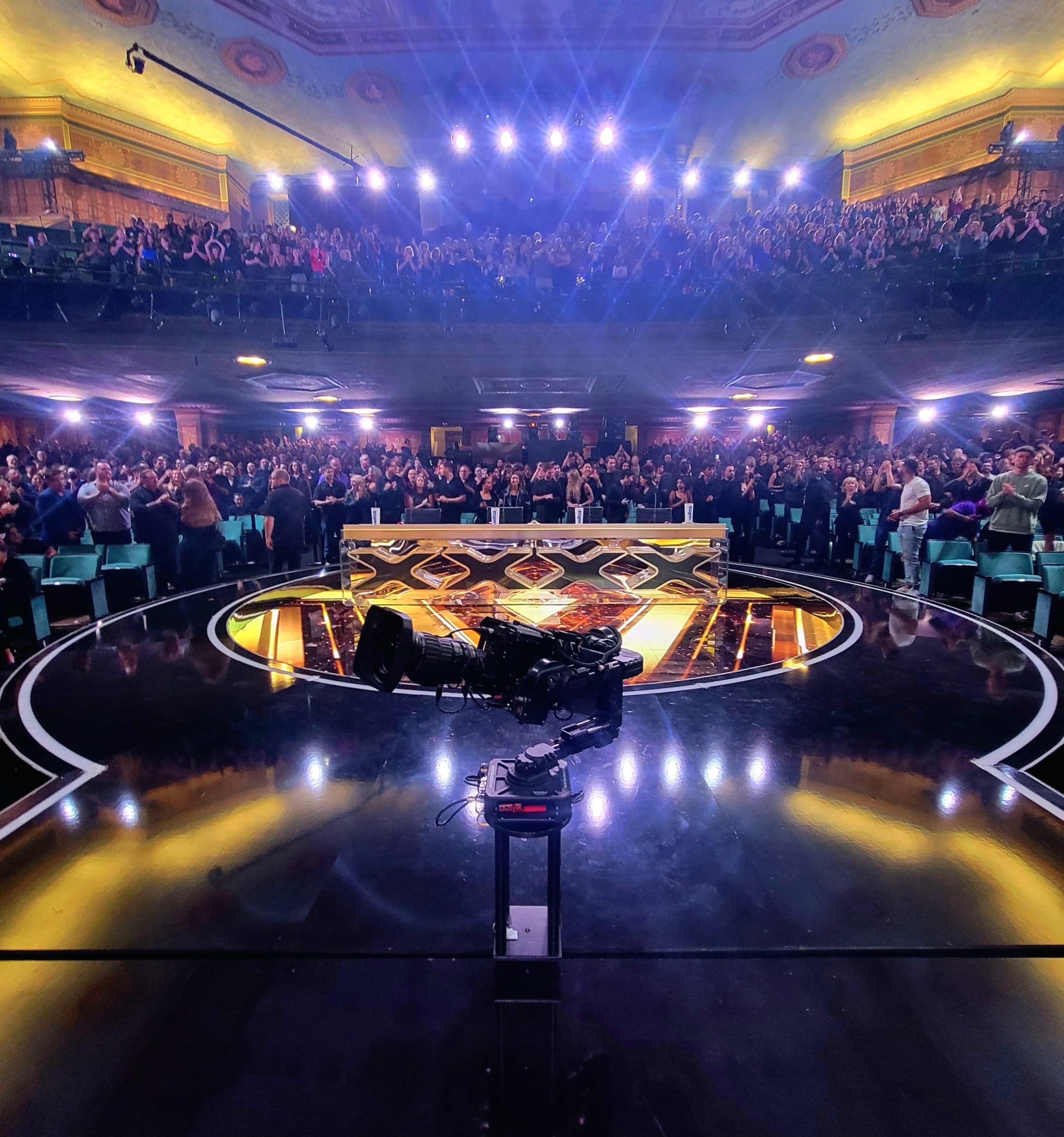
A robotic dolly carries the camera along rail or track while one of our operators drives it from the controls. It rides super smooth, and the operator works off-camera rather than beside the rig.
Furio still goes out today, alongside the rest of the railcam fleet.
Present
Agito dollies, stabilized remote heads, and one-off rigs built in the shop for whatever the show needs.
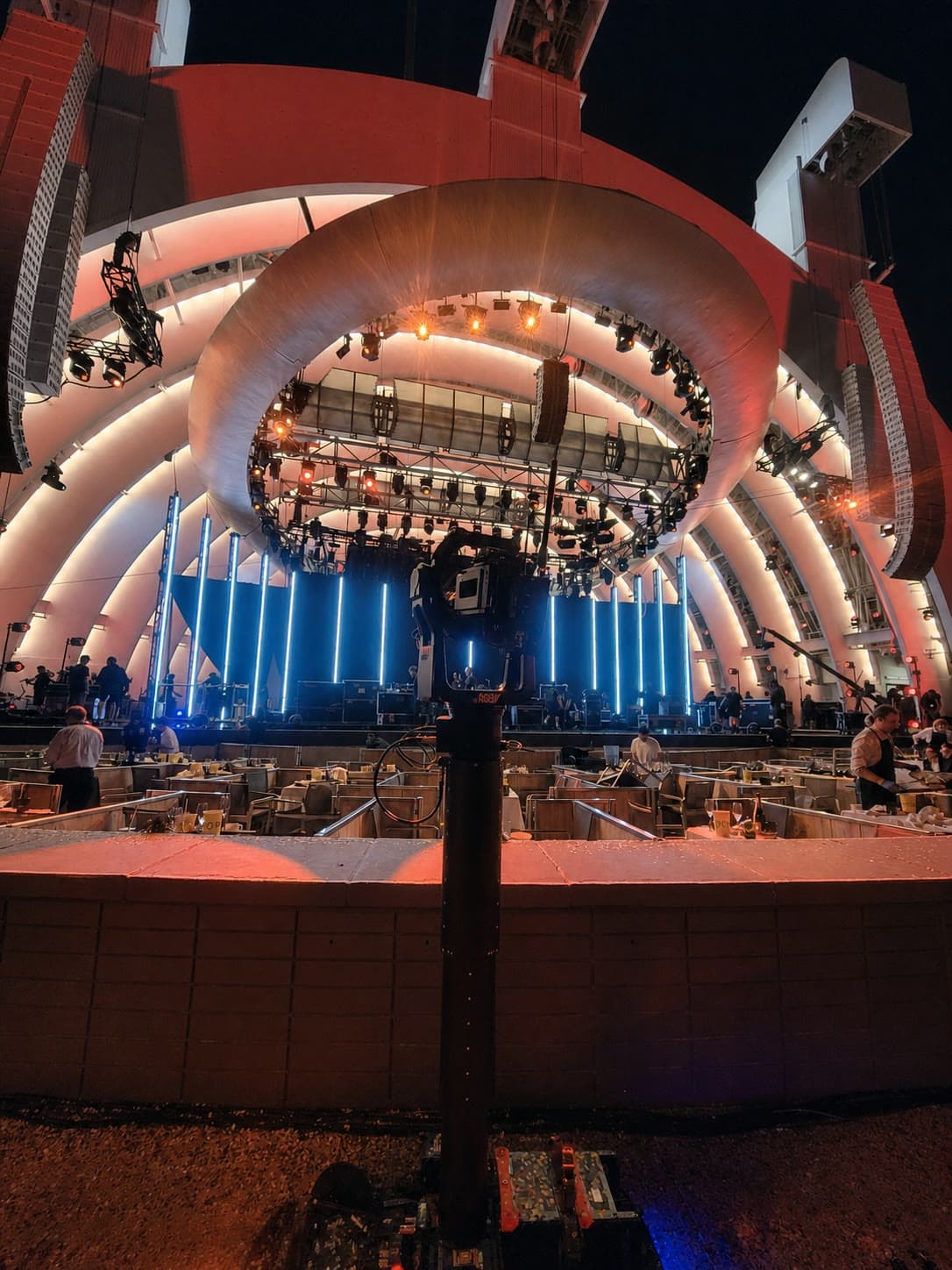
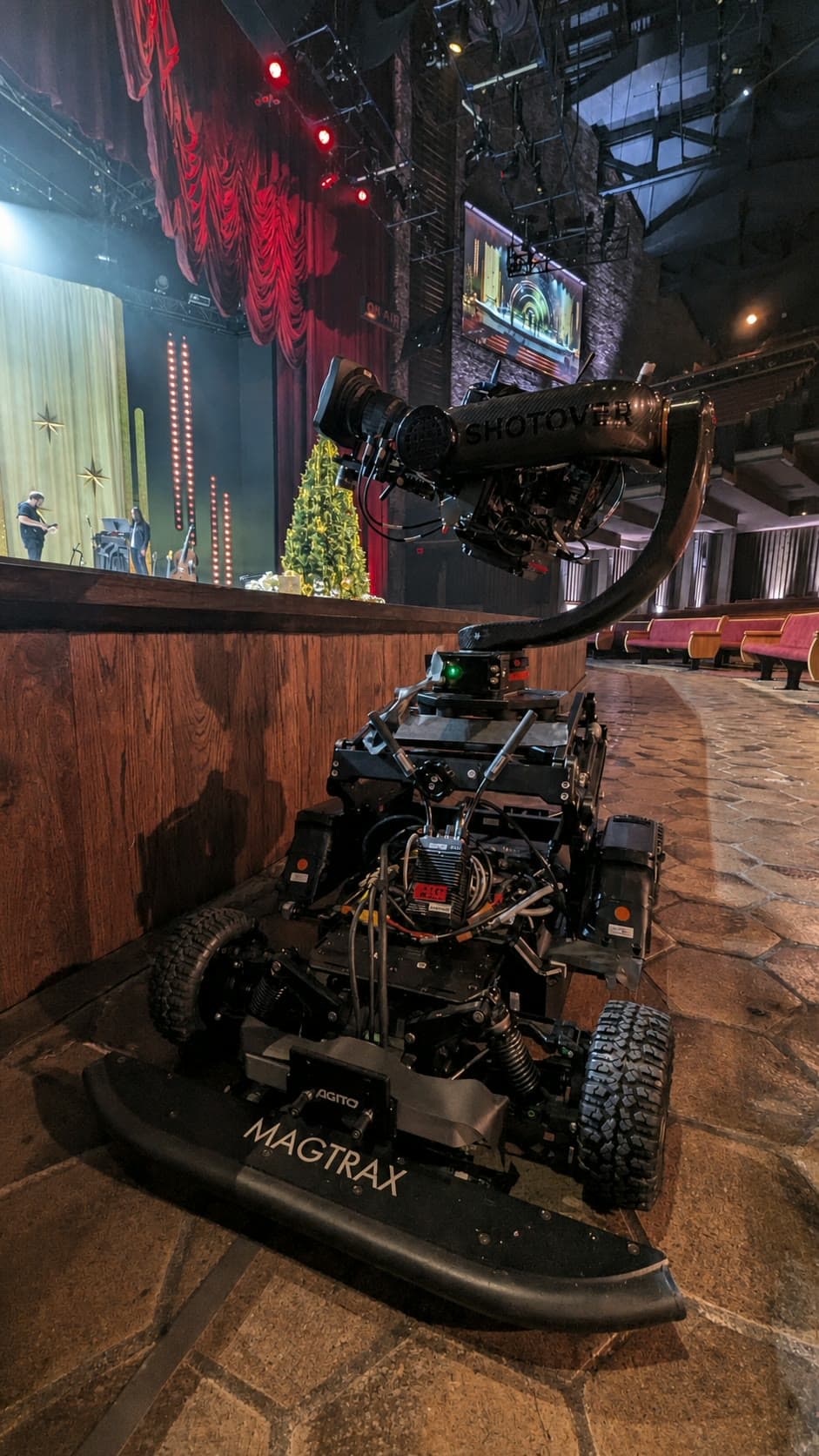
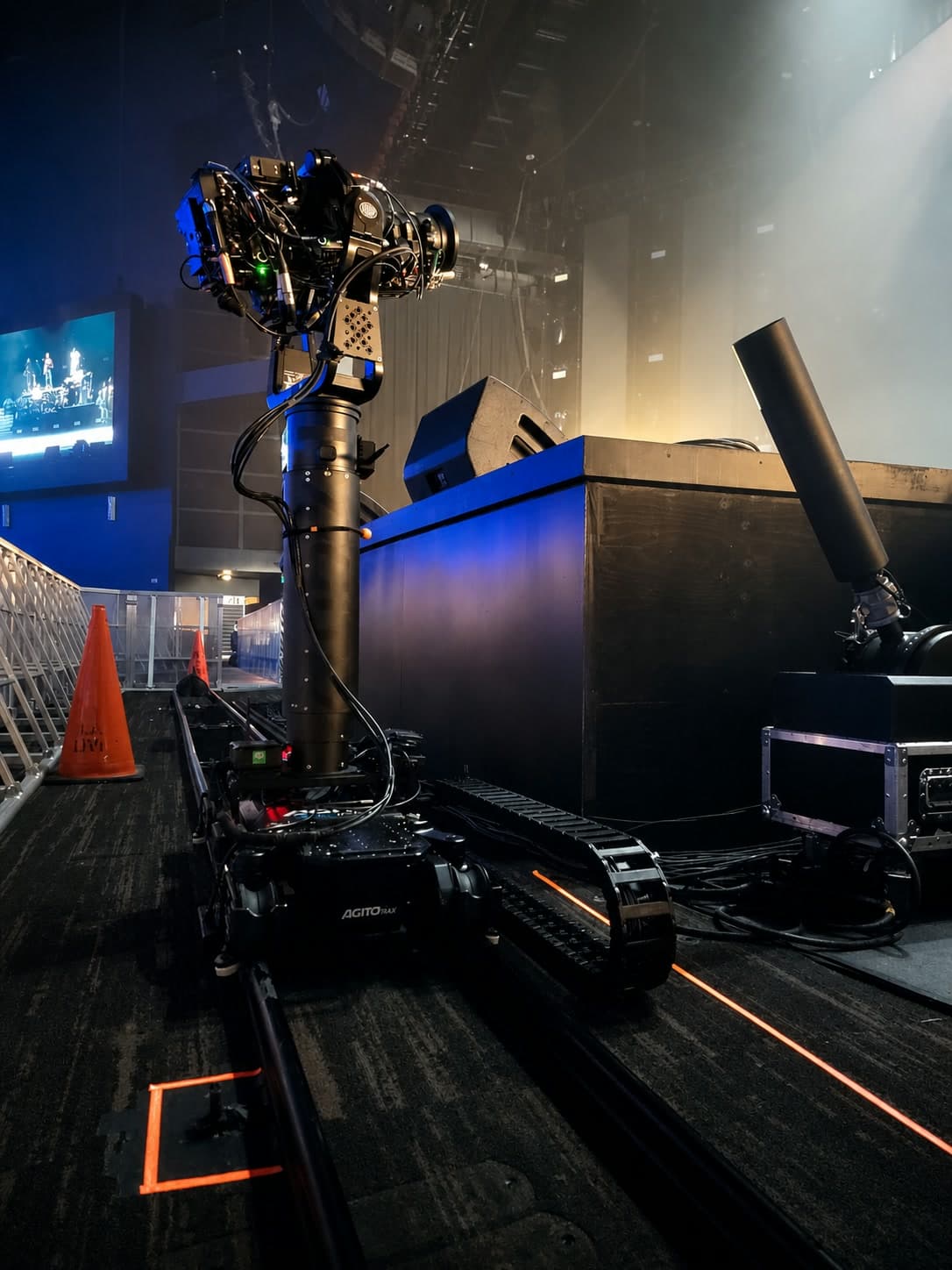
The Agito runs three ways: on magnetic tape as MagTrax, on rail as Trax, or free-roaming with no track at all. It carries a stabilized head through talent and audience at speed.
On top goes a stabilized head: the ARRI SRH-360, which rolls 90 degrees each way, or the FoMa Antares, which rolls a full 360 degrees and has a tilt and roll ring that changes camera height on the fly. The towercams run six sizes, from the 47-inch Mini to the 16-foot Twin Peek.
From that first Stanton Jimmy Jib remote head to the ARRI and FoMa stabilized heads, it all goes out with highly skilled techs, operators, and crew who can do both.
And when a show wants a shot we can't buy the gear for, we build it in the shop. From 1987 on, Fluid Pictures has been a leader, innovator, designer and operator of moving camera systems, old and new.
Innovation
The Jimmy Jib, Steadicam, Towercam and Furio stories are in the timeline above. Below are the firsts we built ourselves.
The first to hang a robotic dolly in the air upside down, opening angles a ground rig can't reach.
The first to run a robotic dolly on curved track, following the sweep of a stage instead of a straight line.
A custom-machined riser that slices through a slot in the stage so a railcam can ride on track underneath, with almost no footprint above.
The Steadicam years
A Steadicam in 1990 was built for film, not for a live show with a director in your ear. So we rebuilt it. The Jimmy Jib's zoom and focus system went onto the handle, which meant one operator could work without a focus puller. Then everything else the job actually needed: an on-board program monitor, an operator tally light, a prompter monitor, a ring light, custom Triax and BNC connectors, ultra-thin SMPTE fibre, a four-wheeled docking stand and Moses pole, and a quarter-size show rundown taped to the side of the camera.
All of it is standard now. In 1990 it changed how Steadicam was used on live television.
Recognition
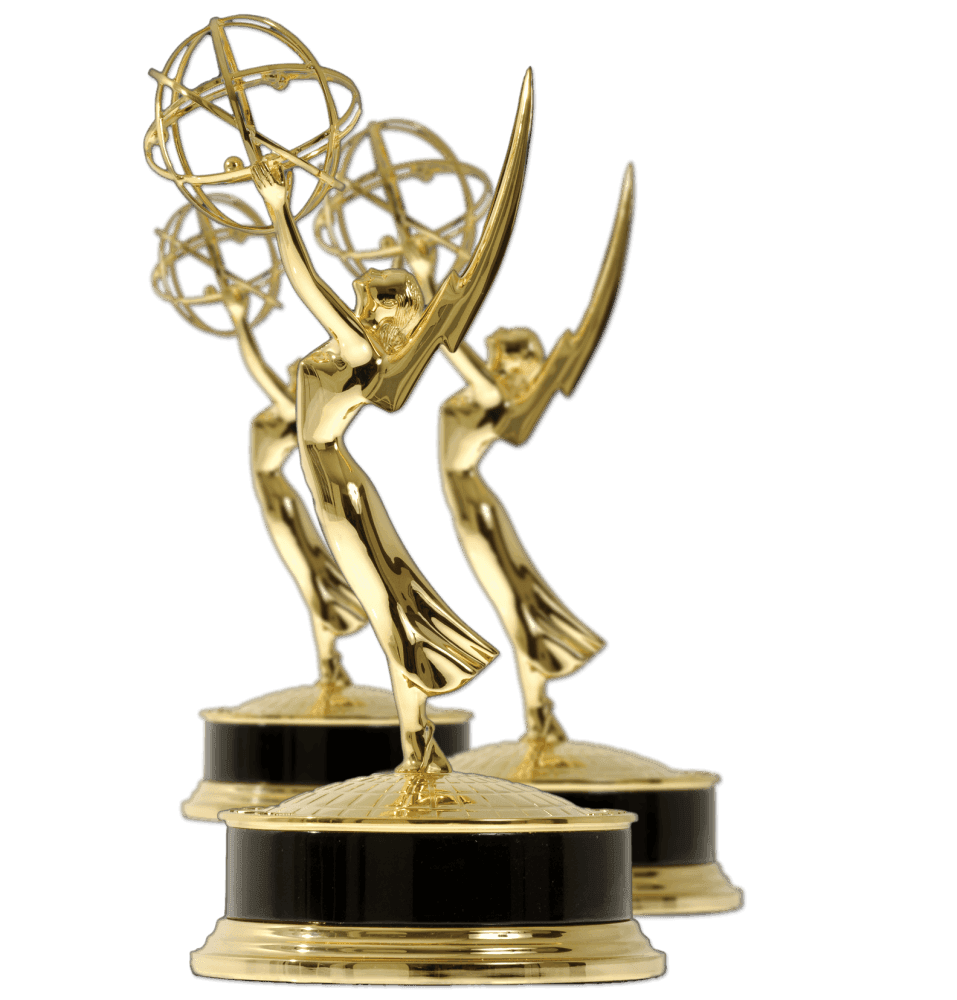
Since 1990, Fluid Pictures has earned 16 Primetime Emmy Awards and 59 nominations. We've supplied specialty camera systems for the biggest shows on television: the Oscars, the Grammys, the Olympic opening and closing ceremonies, American Idol, America's Got Talent, Dancing with the Stars, and many more.
When our Towercam went out on The Help, a Best Picture nominee at the Academy Awards, it put the system in front of the Academy's technical awards committee. The Towercam won. That award belongs to MAT, who make it, but it was our rental that put it in front of the Academy.
Where we work
Our shop is in Chatsworth, in the north end of Los Angeles, and our systems travel to productions across the country and around the world.
21352 Nordhoff St Unit 112, Chatsworth, CA 91311
Work with us
Tell us the show and the shot you're trying to make.